
Termite Inspection and Treatment in Dayton
Inspection and treatment for eastern subterranean termites, the species that lives in Ohio soil, at houses across Dayton.
Subterranean Termites in the Miami Valley
The termite behind nearly all the damage to Ohio houses is the eastern subterranean termite. Its colonies live in the soil, often in very large numbers, and the workers travel up into a house to feed on wood, paper and anything else made of cellulose. They need constant moisture, so they stay hidden inside the wood they eat and inside the mud tubes they build over anything they cannot eat.
The Miami Valley gives them what they need. The soil stays damp for much of the year, and many Dayton houses have wood close to it or touching it: porch posts and steps, sill plates set low on old foundations, framing in damp crawl spaces, mulch heaped against the siding and firewood stacked by the wall. Damage builds slowly and out of sight, which is why it so often comes as a surprise.
Mud Tubes, Swarmers and Hollow Wood
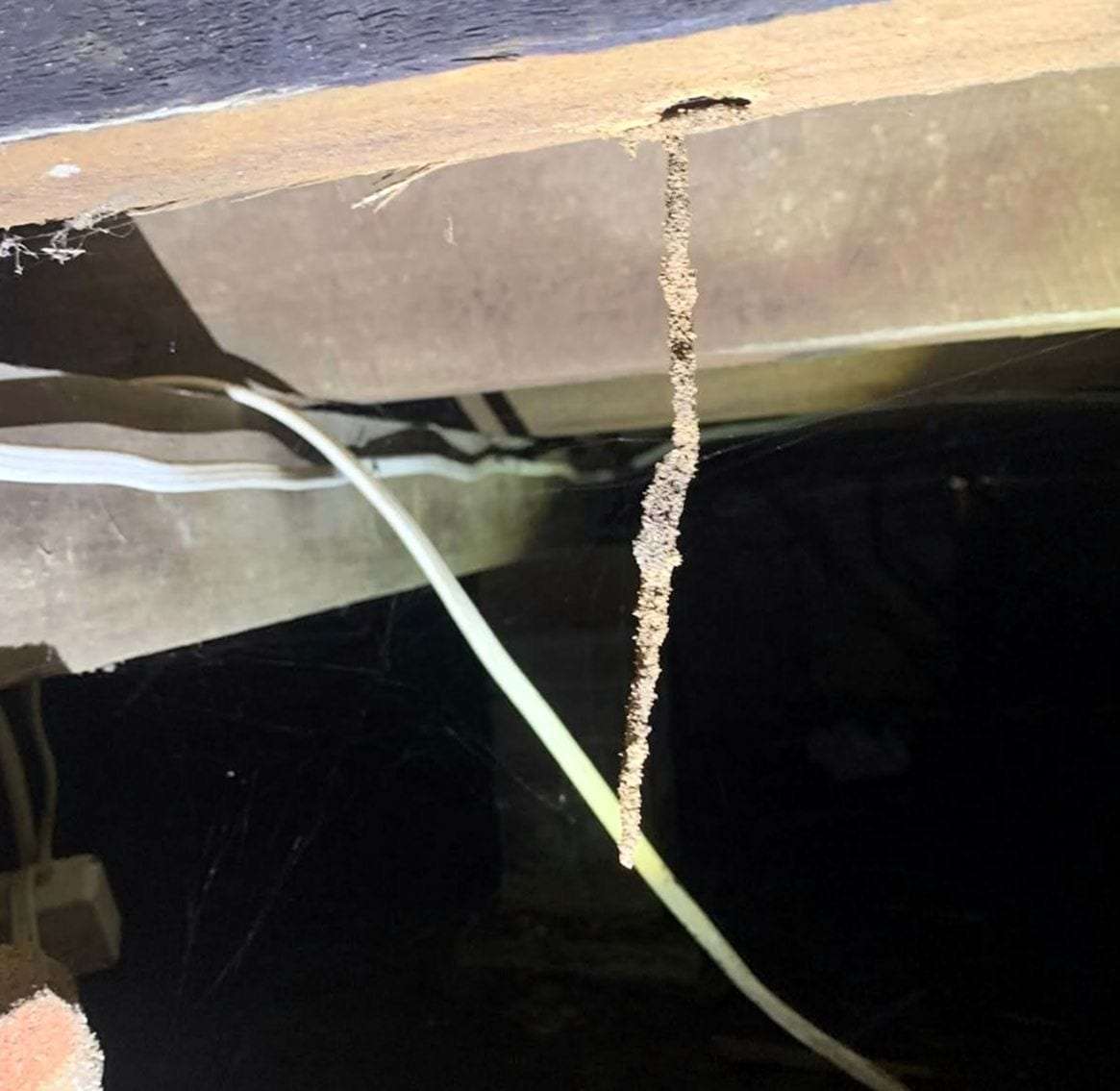
The surest sign is a mud tube: a brown tunnel about the width of a pencil, made of soil, wood particles and saliva, running up a foundation wall, along a pier or down from a floor joist in a crawl space. Termites build them to cross masonry and open air without drying out. If you find one, do not break or scrape it before the inspection, since an intact tube shows the active route; take a photograph instead.
Swarms are the other common warning. On warm days in spring, often after a rain, a mature colony sends out winged swarmers to start new colonies. A swarm indoors, near a window or around a bathtub drain, means the colony is feeding in or under the house. Swarmers drop their wings soon after they land, so small piles of identical wings on a sill may be all that is left to see.
- Mud tubes on foundation walls, piers, joists or the sides of basement steps
- Swarms of winged insects indoors in spring, mostly near windows and bathtubs
- Discarded wings, all the same length, on sills and caught in spider webs
- Wood that sounds hollow when tapped or gives under a screwdriver
- Paint that bubbles, and trim that looks water-damaged where there has been no leak
- Floors that feel soft or sag, and doors or windows that begin to stick
Termite or Flying Ant at the Window
Flying ants swarm too, often in the same weeks, and from across the room the two look alike. Close up, the waist, the antennae and the wings tell them apart. If you can, catch a few in a sealed bag or jar for the inspection; flying ants, if that is what they turn out to be, fall under general pest control.
| Feature | Termite swarmer | Flying ant |
|---|---|---|
| Waist | Broad and straight, with no pinch | Narrow and pinched, like an hourglass |
| Antennae | Straight, like a string of tiny beads | Bent at an elbow |
| Wings | Four of equal length, reaching well past the body | Front pair longer than the back pair |
| Color | Dark brown to black | Black, brown or reddish, by species |
| Loose wings | Shed soon after landing and left in small piles | Usually kept longer, so fewer turn up |
| When they swarm | Warm spring days, often after rain | Spring through late summer, by species |
| What an indoor swarm means | A colony feeding in or under the house | An ant nest in the walls or close by |
Termite Inspections When Buying a House
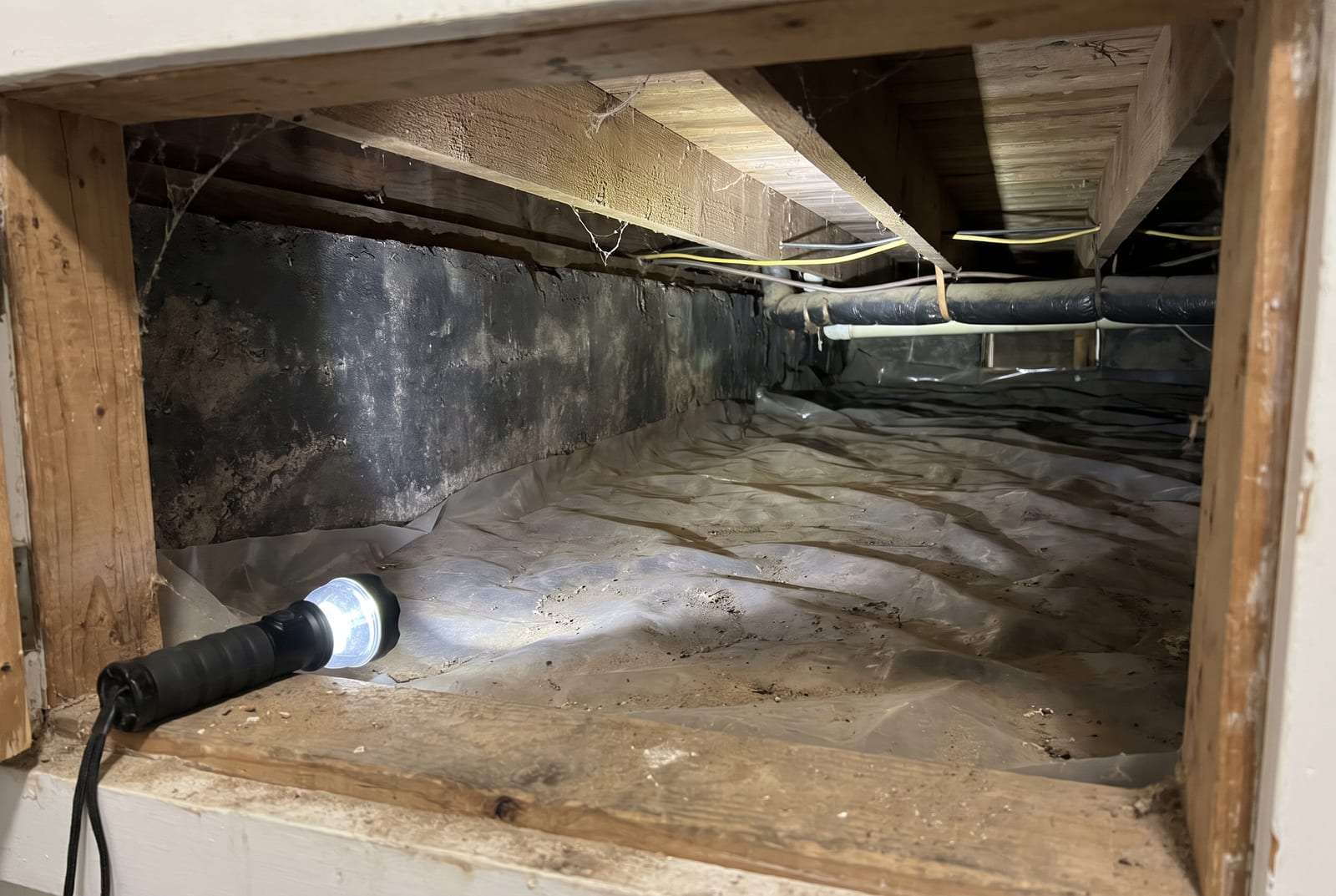
Termite damage can hide behind finished walls and under floors in a house that looks sound, so a termite inspection before closing is worth arranging, particularly on an older house with a basement, a crawl space or a porch.
A termite inspection looks closely at the foundation walls inside and out, the crawl space with its sills, joists and piers, porches and steps that touch the soil, and the conditions that invite termites, such as damp soil, leaking downspouts and wood buried in the yard. A row of small round holes drilled along a slab or a porch shows that the house was treated at some point.
Does a general home inspection cover termites?
Not always in detail. Many home inspectors note obvious signs, while a termite inspection concentrates on termites and the conditions that invite them. Ask each inspector what is included, so that nothing falls between the two.
The seller says the house was treated years ago. Is that enough?
Ask for the records: when the treatment was done and what kind it was. Liquid treatments break down over the years, and bait stations protect a house only while they are kept up, so an old treatment says little about the house today. An inspection shows whether termites are active now.
Can an inspection find termites behind finished walls?
Not directly. An inspection covers what can be seen and reached, helped by tapping and probing the wood and checking for moisture. Finished basements, paneling and carpet limit what anyone can say, and a careful inspector notes which areas could not be reached.
Should termites found during a sale stop the purchase?
Not necessarily. Termites can be treated, and the damage in many houses is limited. What matters is how far the damage goes, which may call for a carpenter’s or a structural engineer’s opinion, and having treatment in place before you move in.
Treating a House for Termites
Two approaches carry most termite work, and each suits some houses better than others. Which one a house gets follows from the inspection, the first step described under How We Work: the type of foundation, the soil, the slope of the yard and any well or cistern nearby all count.
| Method | How it works | Suits which structures | Things to know |
|---|---|---|---|
| Liquid soil barrier | Termiticide worked into the soil all around the foundation, through trenches and holes drilled in concrete, forms a treated zone | Poured foundations and slabs with soil that can be reached all the way round | Works fast; restricted near wells and cisterns; hard to make even along old stone foundations |
| Bait stations | Stations in the soil hold a cellulose bait with a slow-acting growth regulator, which workers carry back to the colony | Houses near a well or a stream, old stone foundations and places where drilling is hard | Slower, often months; stations need regular checks while in use; termites must find them first |
Some houses get both: a liquid treatment where termites are active and bait stations around the rest.
Have the Foundation Looked Over
Swarmers on a sill, a tube on the foundation or a house you are about to buy: any one of them is reason enough to call.