
General Pest Control for Dayton Homes
Ants, cockroaches, spiders, silverfish, boxelder bugs and stink bugs, treated inside the house, around its foundation or both, once the inspection shows where they come from.
Ant Trails, Roach Droppings and Other Clues
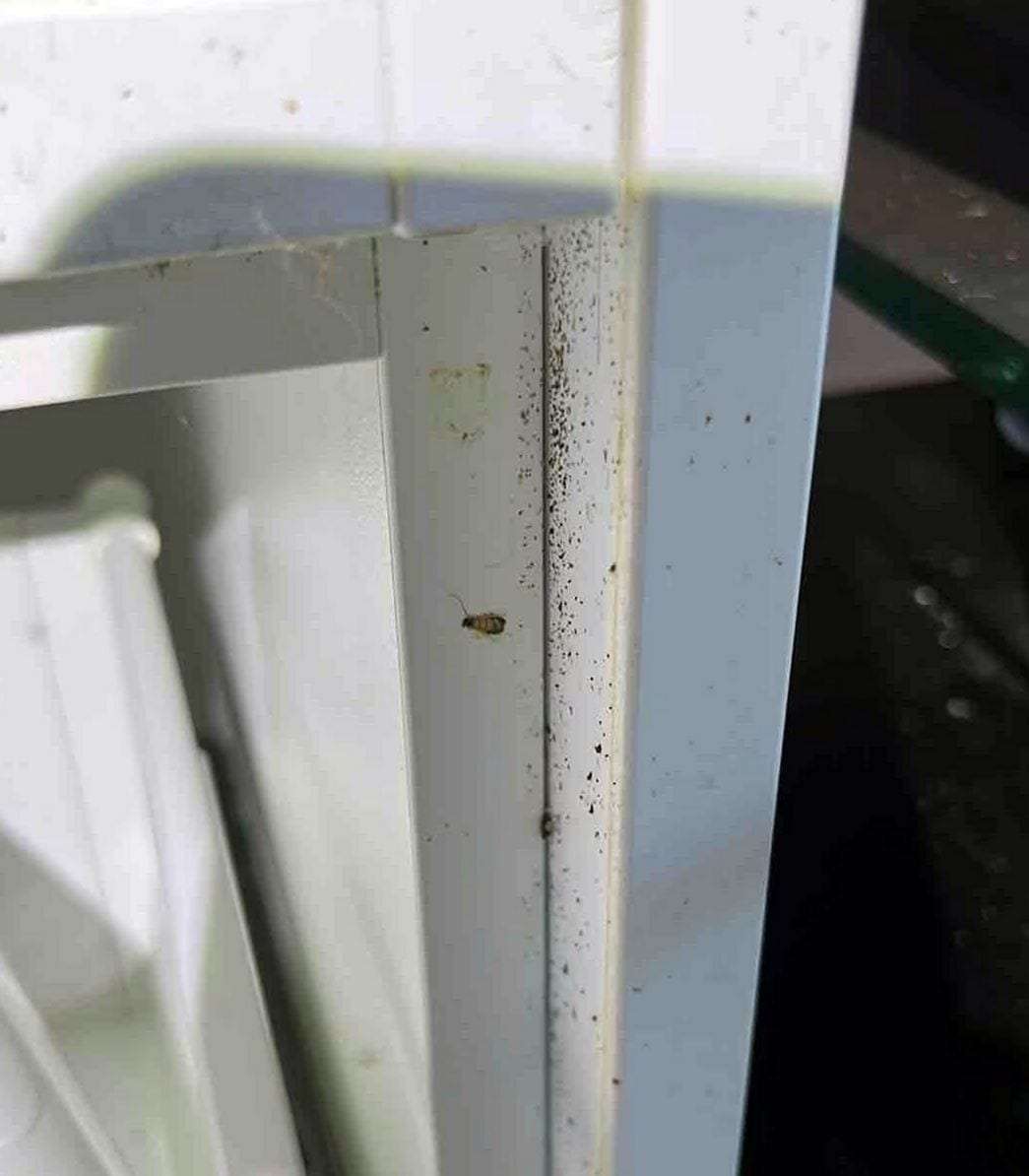
Household pests are seen far less often than their traces. Cockroaches spend the day in the narrowest cracks they can find, along cabinet seams, door hinges and the gap behind the stove, and the dark, pepper-like droppings that build up there are often the first thing anyone notices. German cockroaches, the small light-brown kind with two dark stripes behind the head, live entirely indoors and arrive in grocery bags, cardboard boxes and secondhand appliances.
Ants give themselves away with a trail. Odorous house ants and pavement ants lay scent lines from a crack or a window frame to whatever food or water they have found, and the line leads back toward the place they come in. Spiders leave webs where insects are plentiful, and silverfish turn up in tubs, sinks and stored boxes, feeding on paper, glue and wallpaper paste.
The Miami Valley’s humid summers keep many basements damp, which suits silverfish, spiders and the larger roaches that come up from drains. In the fall, boxelder bugs and brown marmorated stink bugs gather on warm south and west walls and slip into attics and wall voids for the winter. Mice and rats leave signs of their own, covered under rodent control.
Household Pests and the Usual Approach to Each
Each of these pests lives differently, so each calls for its own approach, and two houses with the same ants can have them for quite different reasons.
| Pest | Signs | Where it is usually found | Typical treatment approach |
|---|---|---|---|
| Ants | Trails along counters and sills; soil mounds between pavers | Kitchens, window frames, cracks in the slab | Bait the workers carry back to the nest, and treatment at the entry points |
| Cockroaches | Pepper-like droppings in seams; a musty smell; roaches at night | Kitchens and bathrooms; basements near drains | Bait and crack-and-crevice treatment where they hide, with food and water sources cut back |
| Spiders | Webs in corners and window frames; egg sacs | Basements, garages, eaves, porch lights | Webs and egg sacs removed, cracks and the foundation treated, fewer insects left to feed on |
| Silverfish | Silvery insects in tubs and sinks; chewed paper | Damp basements, bathrooms, stored boxes | Treatment of cracks and voids, with drier air and paper kept off the floor |
| Boxelder bugs and stink bugs | Clusters on sunny walls in fall; bugs at the windows in winter | South and west walls, attics, upper rooms | Outside walls treated and gaps sealed before fall; any that get in vacuumed up |
Exterior Perimeter Treatment vs. Interior Treatment
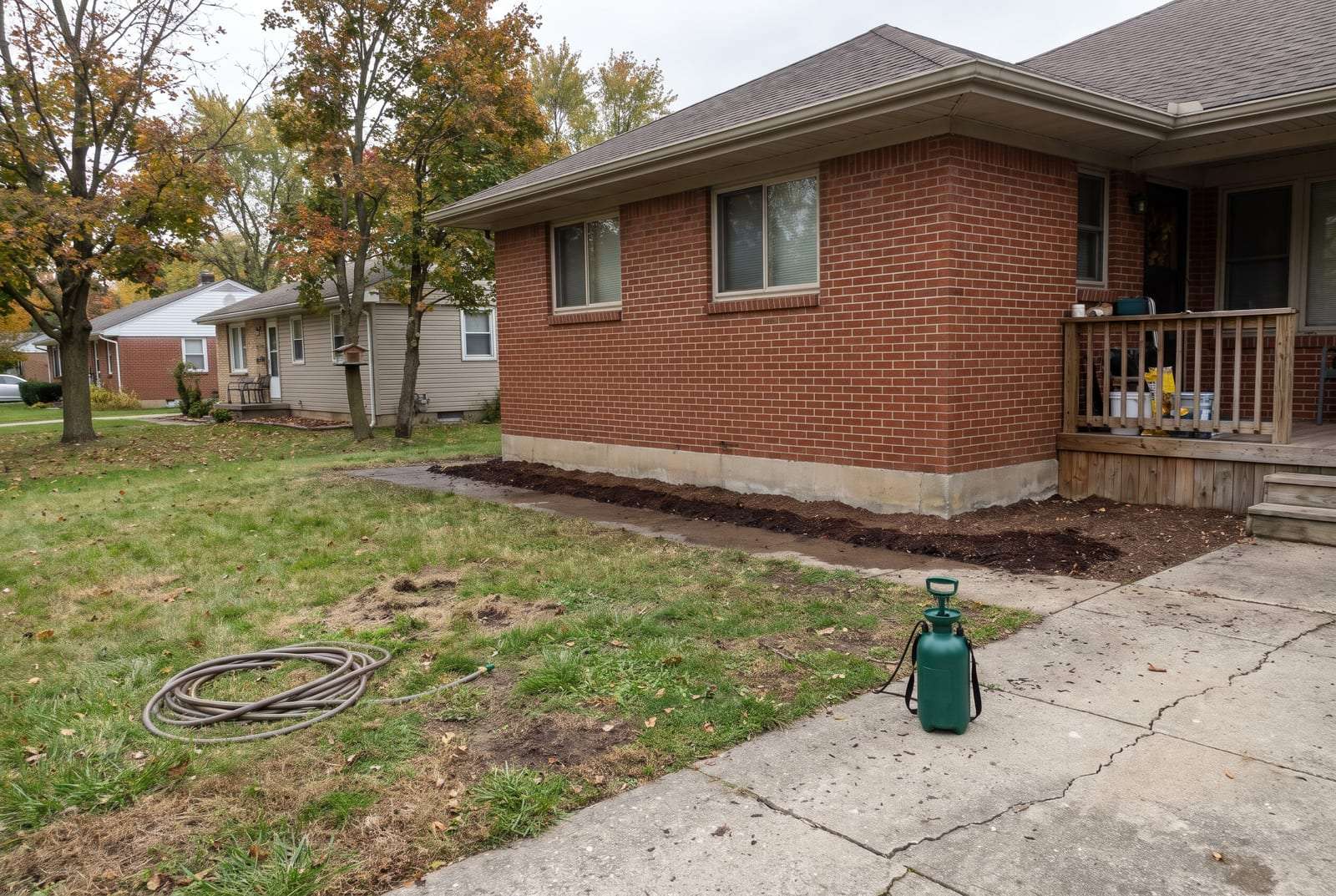
Most of the insects that trouble a house start outside it. They live in mulch, soil and leaf litter and come in at the foundation, around doors and windows and wherever a pipe or cable passes through the wall. A perimeter treatment meets them there: a band of insecticide along the foundation, on the soil and the lower part of the wall, laid down before they reach the gaps.
Interior treatment works the other way round, at the places a pest already lives indoors: the crack behind a stove, the void under a cabinet, the gap where a baseboard has pulled away. It is placed in those spots rather than sprayed across open floors, and it matters most for pests such as German cockroaches that never go outside at all.
Exterior Perimeter Treatment
A treated band along the outside of the foundation and around doors, windows and utility openings.
- Meets ants, spiders, boxelder bugs and stink bugs before they reach the walls
- Keeps most of the treatment out of the living space
- Wears down with rain and sun over the months
- Does little about pests already living indoors
Interior Treatment
Treatment placed in the cracks, voids and hiding places a pest uses inside the house.
- Reaches German cockroaches and other pests that never leave the house
- Uses small amounts in places hands and paws rarely touch
- Calls for some preparation, such as emptied cabinets
- Does nothing to stop new arrivals at the foundation
Many houses need some of each, the perimeter for new arrivals and the interior work for pests already settled in. Which one a house needs, or whether it needs both, follows from the inspection that opens every job, as set out under How We Work.
Cabinets, Counters and Pet Bowls Before Treatment
A little preparation lets the treatment reach the places pests use, and keeps food, dishes and pets out of its way:
- Empty the cabinets under the kitchen and bathroom sinks, where pipes pass through the wall.
- Clear the lower kitchen cabinets and drawers where droppings or roaches have turned up, and box up the dishes, pots and food from them.
- Put away food, dishes and small appliances left out on the counters.
- Pick up pet bowls, pet food and pet beds from the floors of the rooms to be treated.
- Cover fish tanks and turn off their air pumps until the treatment has dried.
There is no need for a deep clean beforehand, but crumbs and grease left on floors and counters give roaches and ants a meal that competes with any bait.
How long should children and pets stay off treated areas?
Until the treated surfaces are dry, or for as long as the product label directs, which can be longer. Ask which rooms and surfaces were treated, and keep crawling children and pets off them until then.
When can the kitchen be used for cooking again?
Once the treated surfaces are dry and the label allows it. Wipe the counters and wash any dishes or utensils that were left out before they touch food. If bait has been placed in cracks or behind appliances, leave it where it is; cleaning over it removes it.
Where should the pet bowls go afterward?
Back down once everything has dried, in a spot away from treated baseboards and cracks. Keeping dry pet food in a sealed bin also stops it feeding the ants and roaches the treatment is meant to remove.
Mosquito Control for the Yard
We also provide mosquito control for yards. Yard treatment generally starts by finding where mosquitoes breed and rest: standing water for the eggs and larvae, and shaded shrubs, hedges and the undersides of leaves where the adults wait out the heat of the day. Water that cannot be drained can be treated with a larvicide made for the purpose, and the resting places with a barrier treatment kept off the flowering plants that bees visit.
Treatment does far less good while water stands in the yard. Mosquitoes can go from egg to biting adult in about a week of warm weather, so a weekly round of the yard makes the biggest difference:
- Tip out buckets, toys, wheelbarrows, tarps and flowerpot saucers.
- Change the water in birdbaths and outdoor pet dishes at least once a week.
- Clear gutters and downspout extensions that hold water after rain.
- Fit screens or tight lids on rain barrels.
- Fill or drain low spots where water sits after a storm.
When Everyday Pests Move In
Whether it is ants on the counter, silverfish in the basement or mosquitoes in the yard, a call or a short request is the place to start.