
Bed Bug Treatment for Dayton Houses and Apartments
How to recognize bed bugs, how to ready a room for treatment, and how heat and targeted chemical treatments each do their work.
What Bed Bugs Leave Behind
Bed bugs are flat, reddish-brown insects about the size of an apple seed. They feed on blood while people sleep and spend the rest of their time pressed into mattress seams, box springs, the joints of a headboard and the gaps behind baseboards. They are no sign of a dirty home: they travel in luggage, clothing and used furniture, and they hide so well that the traces they leave usually show up before the bugs do:
- Bites in a line or a small cluster, often on the arms, neck or shoulders. Bites alone prove little, since some people never react.
- Dark spots along mattress seams and sheets: dried droppings that look like marker dots and smear when wiped with a damp cloth.
- Pale, empty shed skins and tiny white eggs tucked into seams and cracks.
- Small rust-colored stains on sheets and pillowcases, where a bug was crushed after feeding.
- A musty, sweetish odor in a room with a heavy infestation.
To check, run a flashlight along the mattress piping and folds, the underside of the box spring, the headboard and the joints of the nightstand. Seal any insect you find in a clear bag or press it onto tape, so it can be told apart from look-alikes such as carpet beetle larvae.
Preparing a Room for Bed Bug Treatment
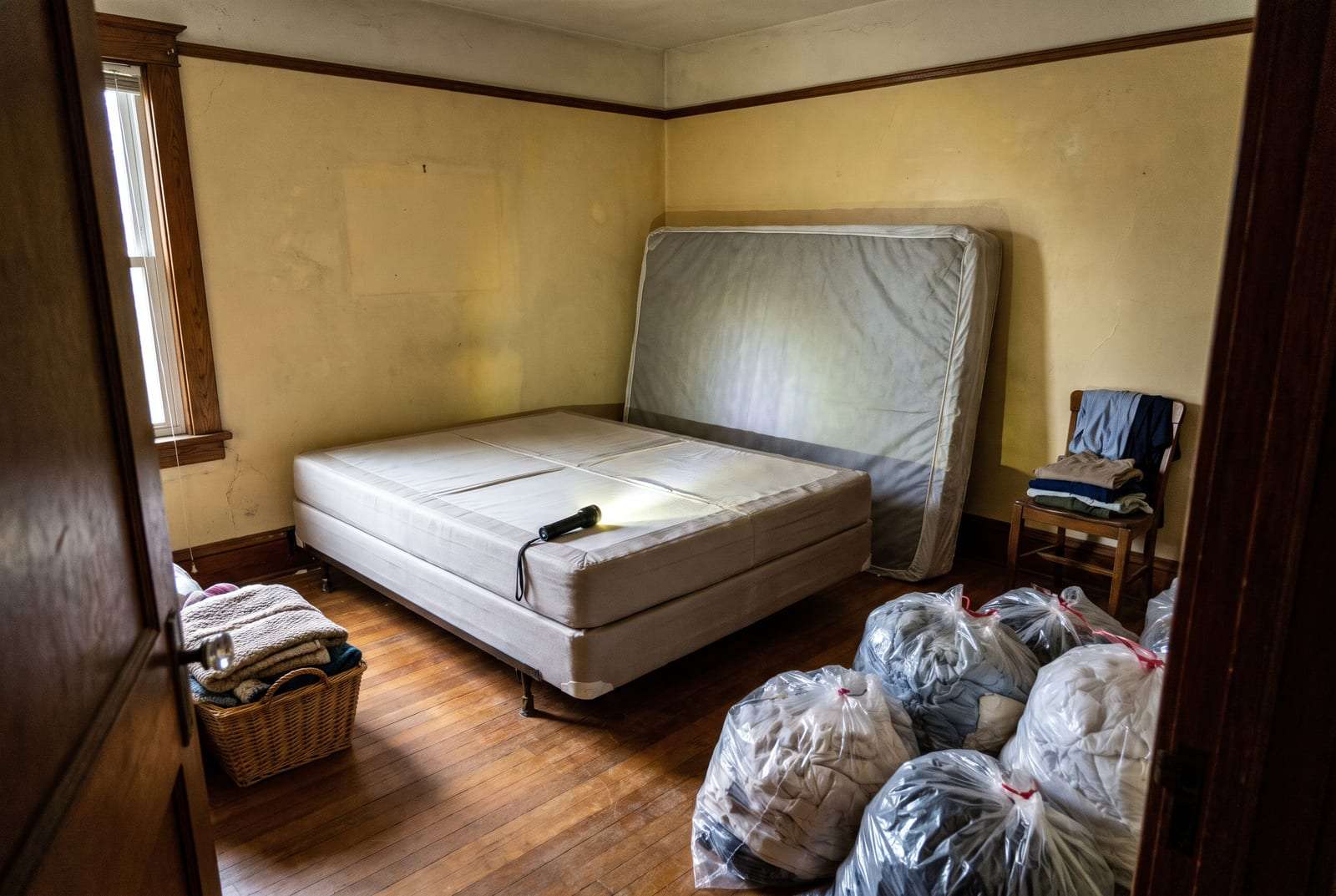
Preparation decides much of how well a bed bug treatment works, since bugs sheltering in a heap of clothes or a box of papers can outlast a treatment that reaches everything around them. Most preparation follows the same lines:
- Launder bedding, curtains and clothing from the affected rooms and dry them on the hottest setting the fabric allows; a full cycle on high heat kills bed bugs and their eggs.
- Seal the clean laundry in clear plastic bags, tied shut, and keep them closed until the treatment is complete.
- Reduce clutter: clear the floor and the space under the bed, and bag loose papers, books and toys, since every object is another hiding place.
- Pull the bed, dressers and couch a little way from the walls, so the baseboards and the backs of the furniture can be reached.
- Vacuum mattress seams, carpet edges and upholstered furniture, then seal what the vacuum collected in a plastic bag for the outside trash.
Heat treatment adds a list of its own, since candles, crayons, medicines, aerosol cans, houseplants and anything that could melt cannot take the temperature. A chemical treatment puts more weight on laundering and bagging. Either way, leave the mattress and furniture where they stand unless the inspection shows they should go: carrying an infested mattress through the house spreads bugs along the way.
Heat Treatment and Targeted Chemical Treatment Compared
Two broad approaches are used against bed bugs, often together, and each has real strengths and limits.
Heat Treatment
Heat treatment raises a room and everything in it to a temperature bed bugs and their eggs cannot survive, and holds it there until the heat has soaked into mattresses, furniture and the gaps along the walls, as probes set in the thickest items show.
- Kills every life stage, eggs included, wherever the heat reaches.
- Leaves no residue on bedding or furniture.
- Cool spots in walls or packed closets can shelter bugs, and nothing is left behind against bugs brought in later.
- Heat-sensitive belongings must be removed or protected first.
Targeted Chemical Treatment
A targeted treatment places products labeled for bed bugs exactly where they hide: seams, bed frames, cracks in furniture, baseboards, outlets and wall voids. Liquids go on surfaces and dusts into voids, and the treated surfaces keep working on bugs that cross them later.
- Keeps acting after the visit, catching young bugs as they hatch.
- Reaches into wall voids, which matters where walls are shared.
- Usually needs more than one visit, since eggs survive many products and bed bugs resist some common ones.
- Calls for thorough laundering and bagging beforehand.
Heat works quickly but leaves nothing behind for stragglers, while a chemical treatment keeps working, so the two are often combined. Our work starts with an inspection, and the choice between them, or a mix of both, follows from what it finds: how far the bugs have spread, the kind of building and furniture, and what the household can prepare.
Steps That Make Bed Bugs Harder to Treat
The urge on finding bed bugs is to act at once, and several of the usual remedies make the problem larger:
- No bug bombs or foggers. The mist settles on open surfaces, never reaches the seams and cracks where bed bugs live, and drives them into the walls and the rooms or apartments next door.
- No moving belongings to other rooms, and no sleeping on the couch or in another bedroom: bed bugs follow the sleeper, and each move carries them to new furniture.
- No rubbing alcohol or other improvised sprays. Alcohol is a fire hazard, and any product used where its label does not allow is unsafe and unlawful.
- No unwrapped mattress or couch left at the curb. If something must go, wrap it in plastic and mark it as infested, so no one carries it into another home.
Staying in your own bed until the treatment is done keeps the bugs in one place, where the treatment can reach them.
Bed Bugs in Apartments, Rentals and Used Furniture
In Dayton’s apartment buildings, bed bugs rarely stay in one unit. They travel along pipes and wiring through shared walls, under doors and across hallways, and treating one apartment while the units beside, over and under it go unchecked often brings them straight back. A tenant who finds signs does best to tell the landlord or manager promptly, in writing.
Landlords and property managers call us for bed bug treatment and for routine service across several units, covered under commercial pest control. An empty unit between tenants is the easiest time to inspect, with the furniture gone and every baseboard in reach.
Who pays for bed bug treatment in a rented apartment?
It depends on the lease and, sometimes, on the cause. Ohio’s landlord-tenant law expects landlords to keep rentals fit and habitable and tenants to keep their own units clean. Because bed bugs move between units, many landlords arrange treatment for the affected apartments together.
Is it safe to bring home a used couch or mattress?
Used mattresses and upholstered furniture are among the commonest ways bed bugs reach a home, and a piece left at the curb may be there because of them. Before anything comes inside, go over every seam, joint and underside with a flashlight, and leave it outdoors if you find dark spots, shed skins or eggs.
How can I avoid bringing bed bugs home from a trip?
In a hotel, look along the mattress seams and behind the headboard before unpacking, and keep luggage on a rack, away from the bed. At home, unpack on a hard floor away from the bedroom, put the clothes straight into the dryer on high heat, and vacuum the suitcase before storing it.
Help with Bed Bugs at Home or in a Rental
Whether it is one bedroom or a building of rental units, call or send an estimate request, and we will begin by looking where the signs have been showing.