
Mouse and Rat Control in Dayton
Mice and rats in Dayton houses, from the basement to the attic, including the exclusion work that seals the gaps they use to get inside.
Mice, Rats and Older Foundations
House mice and Norway rats both live alongside people, but they use a house differently. Mice nest inside, in wall cavities, cabinets and insulation, seldom far from food. Rats are larger and warier; they usually burrow in the soil along a foundation, under a deck or beside a shed, and come inside to feed or to get out of the cold.
Many Dayton houses were built with basements, crawl spaces and foundations of stone or brick, and decades of freeze-thaw winters work the mortar loose. A mouse can squeeze through a gap the size of a dime and a rat through one the size of a quarter, so an older foundation, with its settled sills and old pipe and cable openings, offers a great many ways in. That is why exclusion matters most in older houses: removing the mice inside does little good for long while the gaps that let them in stay open.
Rodent Runways in the Attic and Along the Walls
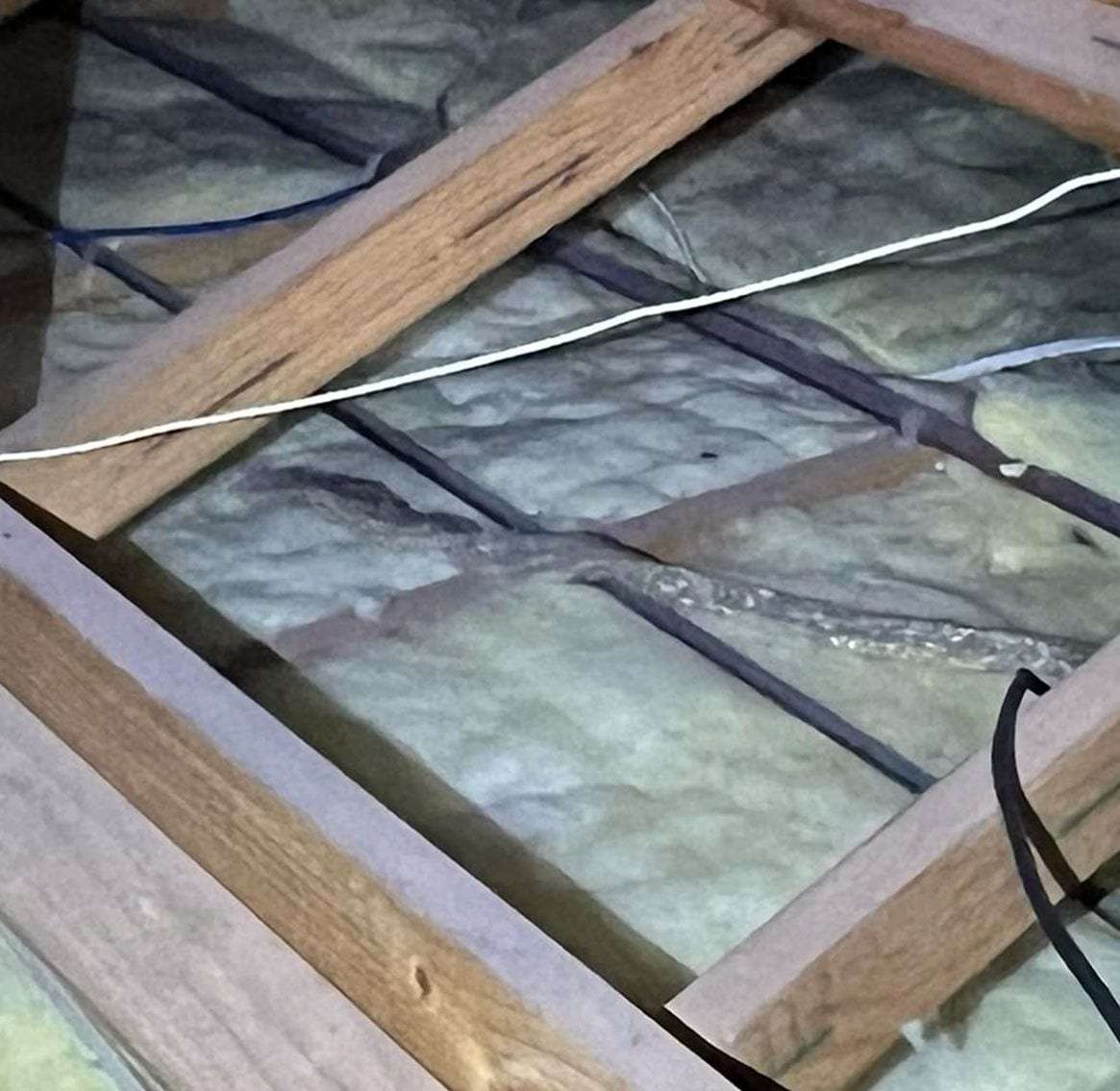
Rodents are seldom seen, but they leave plenty of evidence. The attic is one of the first places worth checking: mice and rats climb inside the wall cavities to reach it, and the insulation between the joists makes warm nesting material. An inspection there looks for runways pressed into the batts, tunnels and nests, droppings along the joists and gnawed cables, which are a fire risk as well as a sign.
Elsewhere the signs collect along the walls, because rodents travel with a wall at their side and keep to the same routes night after night. Droppings and grease marks build up along those runs, and the noises come from the same places:
- Droppings like dark grains of rice along baseboards, in drawers and behind appliances, or larger, blunt-ended ones from rats
- Gnaw marks on wood, plastic, food packaging or wiring, pale when fresh
- Greasy rub marks: dark smudges along walls, pipes and beams where rodents brush past again and again
- Scratching, scurrying or gnawing in the walls or ceiling at night, when the house is quiet
- A dog or cat staring at a wall, pawing under an appliance or sniffing along a baseboard
- Nests of shredded paper, fabric or insulation, and a stale, musky smell in closed spaces
Do not sweep or vacuum droppings while they are dry. Wet them first with a household disinfectant, wear gloves and wipe them up, so that no dust rises from them.
Is the scratching in the wall mice or rats?
Light scratching and quick scurrying after dark usually means mice. Heavier thumps, gnawing and slower, dragging sounds suggest rats. The droppings settle the question: rice-sized for mice, about three-quarters of an inch for rats.
Will the noises stop if I block the hole I can see?
Not reliably. Mice usually have several ways in, and blocking one while they are still inside can leave them in the wall, looking for another way out or dying there. Sealing works best as part of a plan that also deals with the mice already in the house.
What can be done about the smell of a dead mouse in the wall?
The smell is worst in the first days and fades as the carcass dries out, usually within a few weeks. If the spot can be found, from flies, a stain or where the smell is strongest, and reached, removing the carcass is the quickest cure. That smell is one reason traps are often preferred to bait inside a house.
Why do mice come indoors when the weather turns cold?
As the nights cool in the fall, mice look for warmth and food, and the warm air leaking out around pipes, sills and foundation cracks leads them to the gaps. Once inside, they can breed right through the winter. Sealing the gaps before the first cold spell is easier than trapping afterward.
Gaps Rodents Use to Get Inside
Finding the entry points is the heart of exclusion. Most are low on the house, but mice climb well, so gaps at the roofline count too.
| Entry point | What to look for | Where in the house | Exclusion method |
|---|---|---|---|
| Pipe and cable openings | Gaps around the line, gnaw marks, dark rub marks | Under sinks, behind the washer, where utility lines enter | Copper mesh packed in, then sealed with sealant or mortar |
| Foundation mortar and sills | Crumbling joints, gaps at the sill, droppings along the wall | Basement walls, the rim joist, crawl space walls | Mortar patching; mesh and sealant along the sill |
| Exterior doors | Daylight under the door, a chewed or worn sweep | Back doors, basement walkouts | A new door sweep and threshold seal |
| Garage doors | A torn bottom seal, chewed corners, gaps at the sides | Attached garages | A new bottom seal, with the side gaps closed |
| Foundation vents and crawl space access | Bent or missing screens, gaps around the frame | Crawl space walls | Quarter-inch hardware cloth fastened over the opening |
| Dryer and exhaust vents | A missing flap, nesting material, droppings on the ground under it | Laundry, bathroom fan and range hood outlets | A vent cover made for the purpose, never a fine screen on a dryer vent |
| Gaps at the roofline | Openings where the soffit meets the roof, torn gable vent screens | Attic edges and eaves | Hardware cloth or metal flashing over the gap |
Trapping vs. Bait vs. Exclusion Sealing
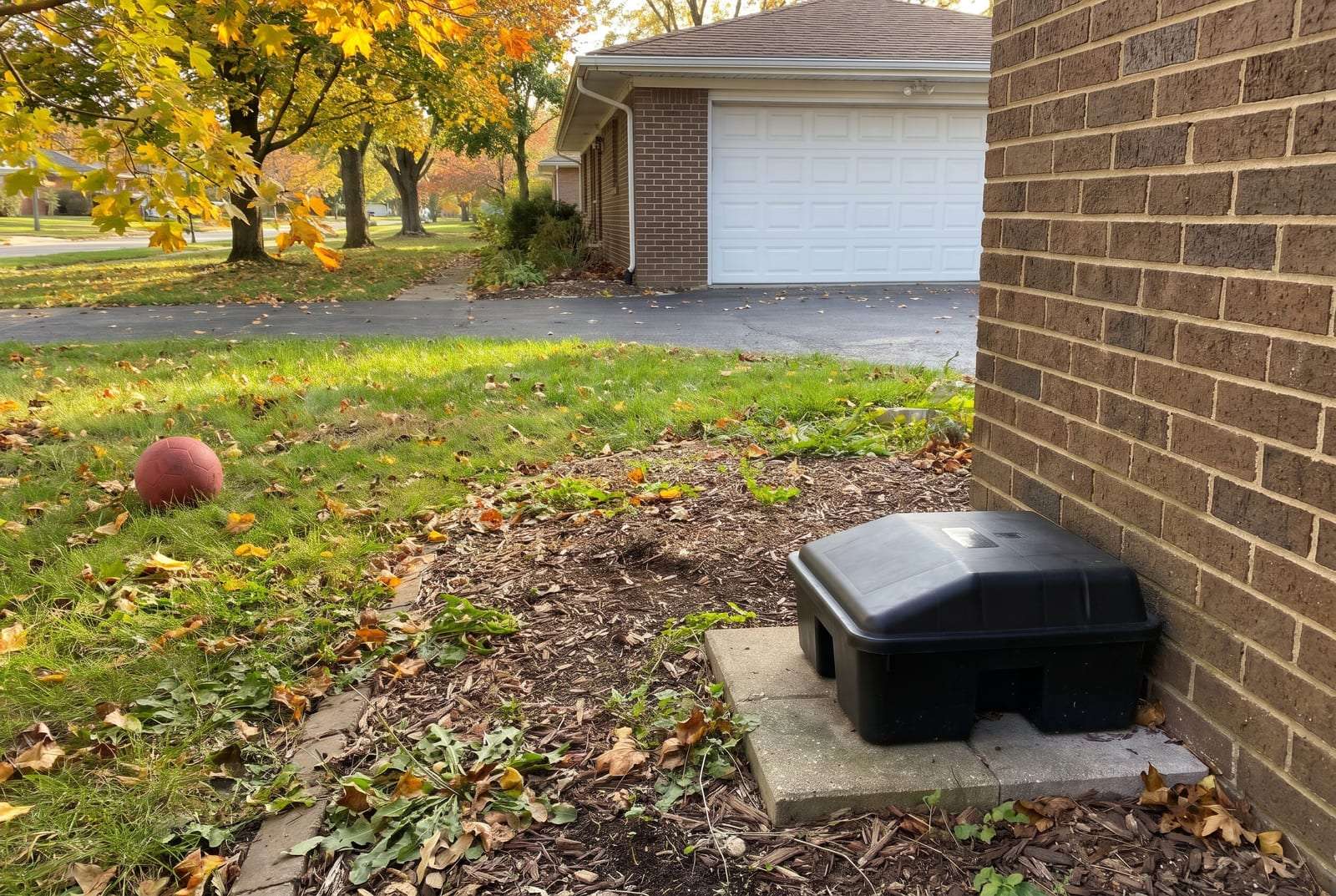
Each method does a different job, and they work best together. Trapping and bait deal with the rodents already in and around the house; exclusion keeps new ones from taking their place. The right mix depends on the house, the rodent and who else lives there, children and pets included, and it follows from the inspection that starts every job, laid out under How We Work.
Trapping
Snap traps set along the walls, at right angles with the trigger end toward the wall, catch mice on the routes their droppings and rub marks reveal. They work quickly, put no poison in the house and leave no carcass to decay out of reach. Indoors, traps belong where pets and children are kept away: inside cabinets, behind appliances or in covered boxes. Rats are wary of anything new, so traps for rats are often left baited but unset for a few days first.
Bait Stations
Rodenticide bait belongs in locked, tamper-resistant stations, anchored outdoors along the foundation or placed in locked areas, where children, pets and wildlife cannot reach it. Bait reaches rodents that avoid traps and suits rats burrowing outside, but the animals die over several days, sometimes inside a wall, and the label sets strict rules on where it may go.
Exclusion Sealing
Exclusion seals the gaps rodents use to get inside, from pipe openings and foundation mortar to doors and vents. It does not remove the mice already indoors, so it goes together with trapping or bait, but it is the part of rodent control that keeps working long after the last mouse is caught.
If Mice Have Found a Way In
Scratching at night and droppings in the cabinets seldom stop on their own. A call or a short request gets the inspection started.