
Commercial Pest Control in Dayton
Scheduled preventive visits for restaurants, shops and offices, and bed bug treatment and routine service for landlords and property managers with several units.
Kitchens, Stockrooms and Rental Buildings
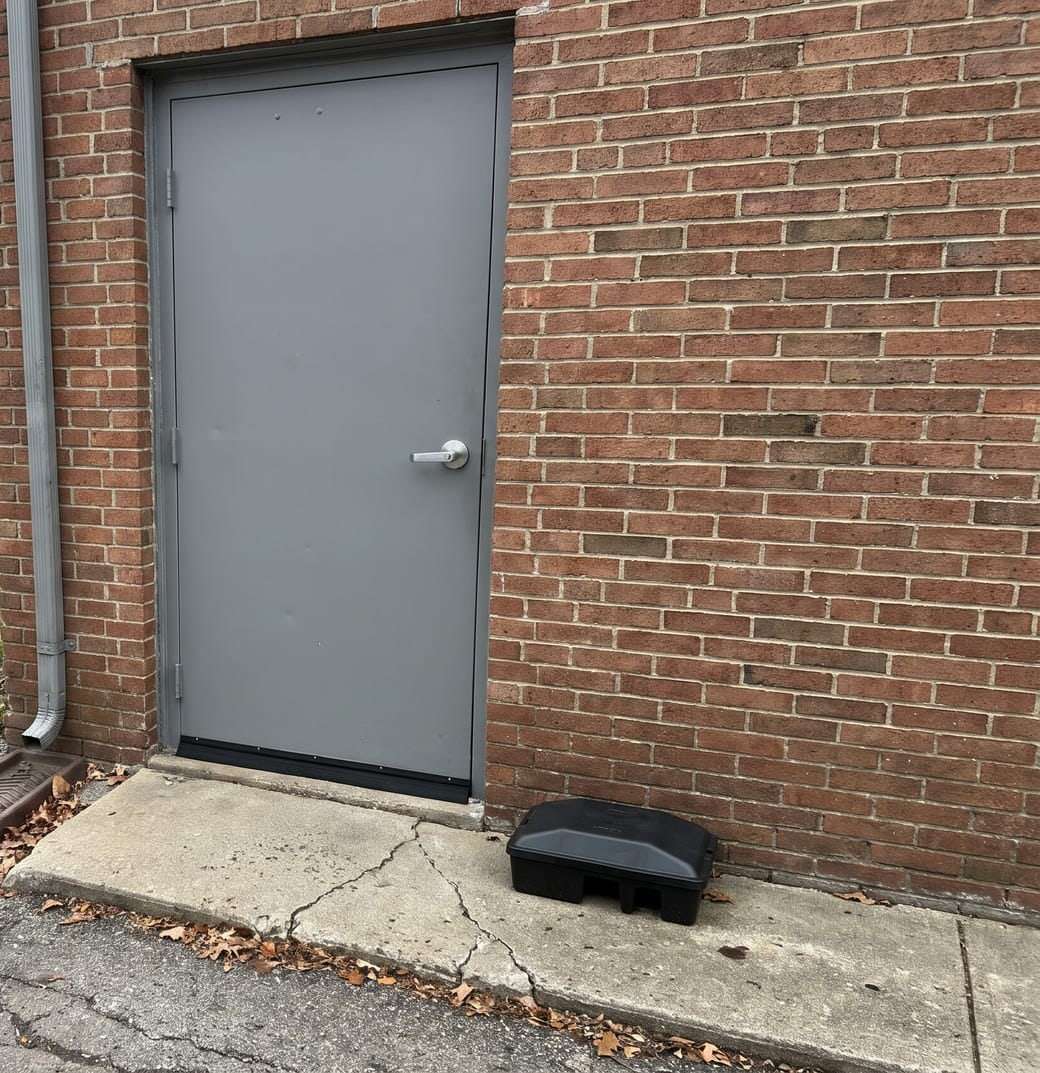
We work for the restaurants, shops and offices that share Dayton’s streets with the houses we look after, and for the landlords and property managers whose apartment buildings and rentals stand among them. Restaurants and shops use scheduled preventive visits to keep roaches and rodents out of kitchens and stockrooms, and landlords and property managers call us for bed bug treatment and routine service across several units.
A storefront with food in the back room and an apartment building with shared walls each bring their own trouble. Deliveries arrive in cardboard that can carry German cockroaches, back doors stand open while stock comes in, and a worn sweep under a steel door leaves a gap a mouse can slip through. In an apartment building, pests move through shared walls, pipe chases and hallways, so a problem in one unit rarely stays there.
Food, water and shelter decide where pests settle in a business, just as in a house: grease under a cooking line, standing water around floor drains and mop sinks, boxes stacked against a stockroom wall, the dumpster pad out back. Keeping those in check matters as much as any treatment.
Property Types and the Pests They Draw
Each kind of property draws its own pests and carries its own concerns.
| Property type | Common pests | Main concerns |
|---|---|---|
| Restaurant kitchen | German cockroaches, house mice, Norway rats | Health inspections, grease and moisture under equipment, deliveries |
| Food storefront | Mice, rats, cockroaches, ants | Food stored in the back room, cardboard, back doors open for deliveries |
| Shop | Mice, ants, spiders, stink bugs in the fall | Stockroom clutter, loading doors, customers seeing pests |
| Office | Ants, mice, cockroaches in break rooms | Food at desks and in kitchenettes, activity no one sees after closing |
| Apartment building | Bed bugs, German cockroaches, mice | Shared walls and plumbing, tenant turnover, treating neighboring units together |
| Several rental houses | Mice, ants, cockroaches, bed bugs | Older basements and foundations, checks between tenants, a record for each address |
Call-Out Treatment or Scheduled Monitoring Visits
Businesses generally arrange pest control in one of two ways, and many use a mix of both.
Call-Out Treatment
A call-out visit answers a problem once it shows: a sighting, a complaint, droppings in a stockroom. It deals with what is happening now.
- Suits offices, shops without food and one-off problems, such as a nest over an entrance.
- Nothing to keep up between problems.
- By the time pests are seen, a population is usually established.
- Leaves no picture of where and when pests come and go.
Scheduled Monitoring Visits
Scheduled visits come on a regular timetable, whether or not anyone has seen a pest. Monitors and bait stations are generally checked, entry points and sanitation looked over, and new activity treated while it is still small.
- Suits restaurants, food storefronts and buildings of rental units.
- Catches activity early, often before staff or tenants notice it.
- Shows, over time, where and when pests tend to appear.
- Depends on good sanitation and reporting between visits.
In a food business, waiting for a sighting is a poor bet, since a roach seen by a customer or an inspector is already a problem; that is why restaurants and shops lean on scheduled preventive visits. For an office with an ant trail in spring, a single call-out visit may be all it needs. Either way, our work starts with an inspection.
Keeping a Pest Log for Rental Buildings
In a building of several units, the pattern matters as much as any single sighting. Complaints that cluster along one stack of apartments point to a shared wall or a plumbing chase, and droppings that keep turning up by one door point to the gap pests are using. A simple log kept by the manager makes those patterns plain. It is worth recording:
- Sightings, with the date, the unit or room, and exactly where: under a sink, along a baseboard, by the trash room door.
- Tenant complaints: who reported what, when, and what was done about it.
- Sanitation issues: overflowing dumpsters, grease, leaks and standing water, clutter in storage areas.
- Access points: gaps around pipes, worn door sweeps, torn screens, holes in the foundation or siding.
- Treatments and inspections, with the date and the units they covered.
- Unit turnovers, with a note on the state of each empty unit between tenants.
Kept up week by week, a log like this shows whether a problem is shrinking or moving, and it gives a clear account when an owner or a tenant asks what has been done. Gaps that mice and rats use are dealt with through the exclusion work that is part of rodent control.
Tenants, Landlords and Health Inspections
Who answers for pests in a rental, and what an inspector expects to see in a kitchen, are both worth understanding before a problem starts.
Who is responsible for pest control in an Ohio rental?
Generally, both sides have a part. Ohio’s landlord-tenant law expects landlords to keep rentals fit and habitable and tenants to keep their own units clean, and who pays for a particular treatment often comes down to the lease and, sometimes, to the cause of the problem.
Pests that move through shared walls, such as bed bugs and German cockroaches, rarely stop at one unit, which is why many landlords arrange treatment for the affected units together. For a question about a specific lease, the lease itself and a lawyer are the places to look.
What should a tenant do first on finding pests?
Tell the landlord or property manager promptly, preferably in writing, with the date and what was seen where. Avoid foggers and store-bought sprays in the meantime: they tend to drive bed bugs and roaches into the walls and the neighboring units, which makes the building harder to treat.
What do health inspectors look for in a restaurant?
Inspectors generally look for signs of pests and the conditions that invite them: live or dead insects, droppings, gnaw marks, openings to the outside, food stored on the floor, grease build-up and standing water. They may also ask how the business keeps pests under control.
Can scheduled visits promise a clean health inspection?
No pest control service can promise an inspection result, and it is wise to be wary of any that does. What regular visits do is find activity early, while it is still small, and keep watch on entry points and conditions between inspections, alongside the kitchen’s own cleaning routine.
A Short Inquiry for Businesses and Landlords
Name the business, the type of property and the pest that concerns you, and we will reply by phone or email.
Thank you. Your request has reached us, and we will reply by phone or email.
We are sorry, but the request did not go through. Please call us at (937) 764-9481 instead.
Arranging Service for a Business or Building
If you would rather talk the property through, call us; for a fuller description, the estimate request has room for it.